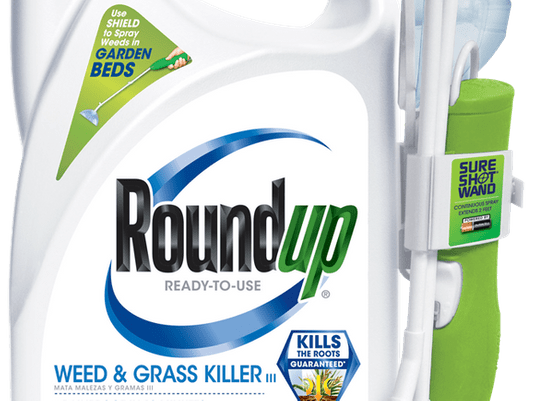
You have probably seen the ads on
television about the lawsuits against Roundup’s manufacturer, Monsanto. You
have probably also seen that these lawsuits are regarding people who have
developed Non-Hodgkin Lymphoma from exposure to glyphosate, the ingredient
found in Roundup.
But you have been exposed to
glyphosate your entire life and haven’t gotten cancer, so what’s the deal? Is
this just a bunch of hype?
What is lymphoma?
Lymphoma
is the most common type of blood cancer. Specifically, lymphoma is a cancer
that affects lymphocytes,
which are a type of white blood cell. Lymphocytes travel through the blood
and lymphatic system to
defend the body against foreign invaders like bacteria and viruses.
Lymphomas usually develop when a change, or mutation, occurs within a
lymphocyte, causing the abnormal cell to replicate faster than, or live longer
than, a normal lymphocyte. Like normal lymphocytes, cancerous lymphocytes
can travel through the blood and lymphatic system and spread and grow in many
parts of the body, including the lymph nodes, spleen, bone marrow, and other organs.
Non-Hodgkin’s lymphoma is one of the most common cancers,
representing 4 percent of all
cancers in the United States. It is an acquired disease, meaning that you’re
not born with it and you may not have other family members with the disease.
Doctors don’t know exactly why NHL occurs, but believe something triggers the
body’s response.
When
it’s difficult to pinpoint a specific cause, it does make sense to look at
environmental factors.
The challenge is being
able to identify an individual factor. For example, it’s possible that someone
could develop NHL from an infection not yet identified, or from a different
toxin in the environment. Why would one person who is exposed to the toxin get
sick, but others who are exposed might not?
There are no answers to these questions. Researchers and scientists have studied and tested lymphoma
types of cancer, and some studies have shown that when glyphosate, the active
ingredient in Roundup, enters the body through the eyes, skin or nose the
chemical can change the genetic material of cells, so that they multiply
endlessly without dying. This type of exposure to pesticides and herbicides
containing glyphosate chemical such as Roundup, may greatly increase the risk
of lymphoma types of cancer.
How many types of lymphomas
are there?
There are more than
90 types of NHL, some of which are more common than others. Any lymphoma that
does not involve Reed-Sternberg cells is classified as non-Hodgkin lymphoma.
Approximately 80,000 people are diagnosed with NHL each year in the United
States.
There are three major groups of lymphomas:
- B-cell lymphoma. About 90% of people in western countries with lymphoma have
B-cell lymphoma.
- T-cell lymphoma. About 10% of people with lymphoma have T-cell lymphoma.
These lymphomas are more frequent in Asian countries.
- NK-cell lymphoma. Less than 1% of people with lymphoma have NK-cell lymphoma.
NHL is also described by how quickly the cancer is growing, either
“indolent” or “aggressive.” Indolent and aggressive NHL are equally common in
adults.
Some subtypes of lymphoma cannot easily be classified as indolent
or aggressive. For example, mantle cell lymphoma (see below) has both indolent
and aggressive NHL features.
Diffuse large
B-cell Lymphoma
Follicular
lymphoma
Mantle cell
lymphoma
Burkitt’s
lymphoma
Cutaneous
T-cell lymphomas
AIDS-related
lymphoma
CNS lymphoma
Adult T-cell lymphoma
Anaplastic large cell lymphoma
Double hit lymphoma
Lymphoblastic lymphoma
Mucosa-associated lymphoid tissue lymphoma
Nodal marginal zone lymphoma
Peripheral T-cell lymphoma
Primary central nervous system lymphoma
Skin lymphomas
Small lymphocytic leukemia
What
types of lymphoma are being linked to glyphosate related cancers?
At first blush, the quick answer is B-Cell NHL. A 2014 Meta
Analysis Roundup Cancer study showed, “B cell lymphoma positively associated
with…the organophophorus herbicide glyphosate.” (Authors Leah Schinasi and
Maria E. Leon, Section of Environment and Radiation, International Agency for
Research).
Who is most at risk for
exposure to glyphosate related cancers?
- Farmers and agricultural workers;
- Garden nursery employees;
- Landscapers;
- Golf course caregivers; and
- Park and municipal landscapers
History
of Monsanto
- 1901 – Monsanto is founded in St. Louis, Missouri;
- 1965 – Monsanto begins producing Agent Orange, a very toxic herbicide and defoliant used in the Vietnam War;
- 1974 – Monsanto brings to the market the glyphosate-based herbicide called Roundup;
- 1996 – Monsanto develops the first “Roundup Ready” crops; These are plant seeds which are genetically modified so they are not affected by the Roundup herbicide;
- 1996 – Monsanto is sued by the New York State attorney general for misleading advertising, saying that their glyphosate-based herbicides were “safer than table salt”;
- 2001 – The American Association for Cancer Research published a study researching if herbicides could cause non-Hodgkin’s lymphoma. study researching if herbicides could cause non-Hodgkin’s lymphoma. A link was found between glyphosate-exposure and non-Hodgkin’s lymphoma;
- 2003 – An American study was published, researching the link between pesticide and herbicide exposure and non-Hodgkin’s lymphoma in farms. Several of these substances were found to be linked with an increased chance of developing non- Hodgkin’s lymphoma, one of these being glyphosate;
- 2008 – A Swedish study was published, researching if exposure to pesticides would increase the chance of non-Hodgkin’s lymphoma in men and women aged between 18 and 74 years old. At the end of the study, the researchers claimed “In conclusion our study confirmed an association between exposure to phenoxyacetic acids and NHL and the association with glyphosate was considerably strengthened.”
- 2009 – Monsanto is confirmed to have been convicted of false advertising in a French court, after saying that Roundup left the soil clean; The European Union classified it Roundup as being “dangerous for the environment”;
- 2013 – Entropy, a Switzerland-based scientific journal, concludes that glyphosate enhances chemical residues and environmental toxins, saying that “Negative impact on the body is insidious and manifests slowly over time as inflammation damages cellular systems throughout the body.” They write that among other negative consequences that glyphosate can have on the body, one of them is cancer;
- 2014 – A study was published, researching the link between occupational exposure to pesticides and farmland workers. At the end of the study, they found out that “In a handful of papers, associations between pesticides and NHL subtypes were reported; B cell lymphoma was positively associated with phenoxy herbicides and the organophosphorus herbicide glyphosate.”
- 2015 – The International Agency for Research on Cancer (part of the World Health Organization) places glyphosate in Group 2A, meaning that they found it to be “probably carcinogenic to humans”; This year, people begin to file the first lawsuits against Monsanto, alleging that they have developed cancer because of the product;
- 2016 – The Journal of Occupational and Environmental Medicine, a peer-reviewed medical journal, publishes a study, concluding that glyphosate is associated with “a high risk of cutaneous melanoma”, (skin cancer);
- 2018 – The first Roundup lawsuit to go to trial results in the plaintiff winning $289 million (this verdict was reduced down to $78 million); Dwayne Johnson is a former groundskeeper who says that his non-Hodgkin’s lymphoma was caused by exposure to glyphosate; This year, Bayer, a German multinational company, acquires Monsanto for $66 billion; They intend to discontinue the Monsanto name, as an attempt to try and recover some trust from the public.
- 2018 – Bayer purchases Monsanto for $63 billion.
- 2019 – A second Roundup lawsuit received a unanimous verdict in favor of the plaintiff, Edwin Hardeman as to the first phase of his trial clearing the way for the jurors to decide whether Bayer unit Monsanto is liable and must pay damages to Mr. Hardeman.
- There are currently approximately 11,200 lawsuits pending against Monsanto for glyphosate related cancers.
What
do I do if I have NHL and believe it may be caused by glyphosate?
The best thing to do
is contact an attorney who has experience with Multi-District Litigation (MDL)
cases. Crandall Law Office has represented plaintiffs in MDL litigations
relating to Zoloft, transvaginal mesh, hernia mesh, Trasylol and Roundup.
We have an
experienced staff ready to answer your questions.
Please call us at
208-343-1211. We can help anyone in the United States with their claim.


 Crandall Law Office